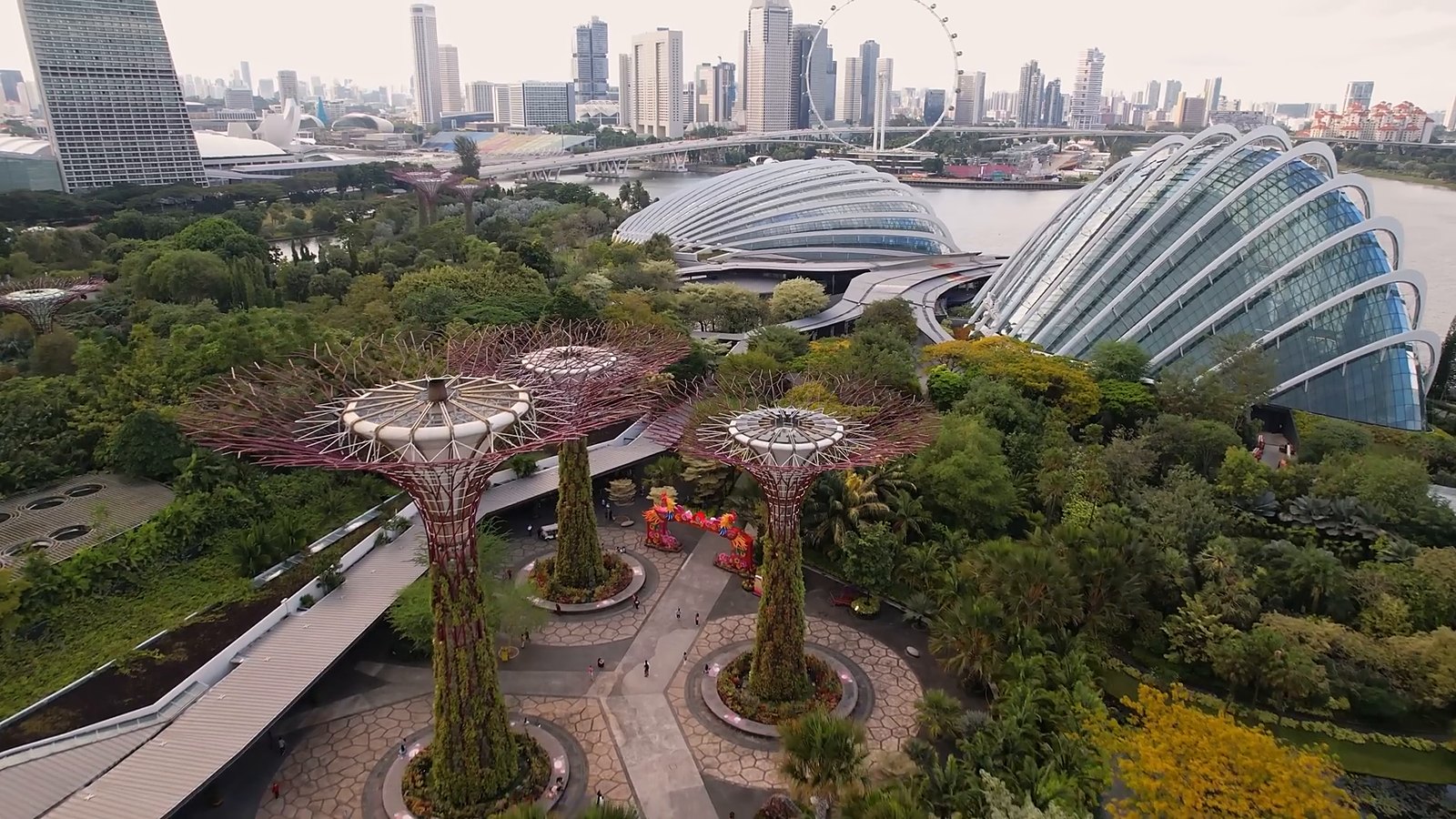
Some of the Supertrees Are Chimneys: How Gardens by the Bay Really Works
Crews trim roadside trees all over Singapore, and the branches have to go somewhere. Some of them end up at Marina Bay, where they're burnt to help keep the Flower Dome cool. The exhaust from that fire leaves through the Supertrees.
Most visitors walk past all of this without knowing it's there. Here's how two glass domes stay cool on the equator, what the Supertrees actually do, and whether it all adds up to "green".
How do you keep a glass house cold on the equator?
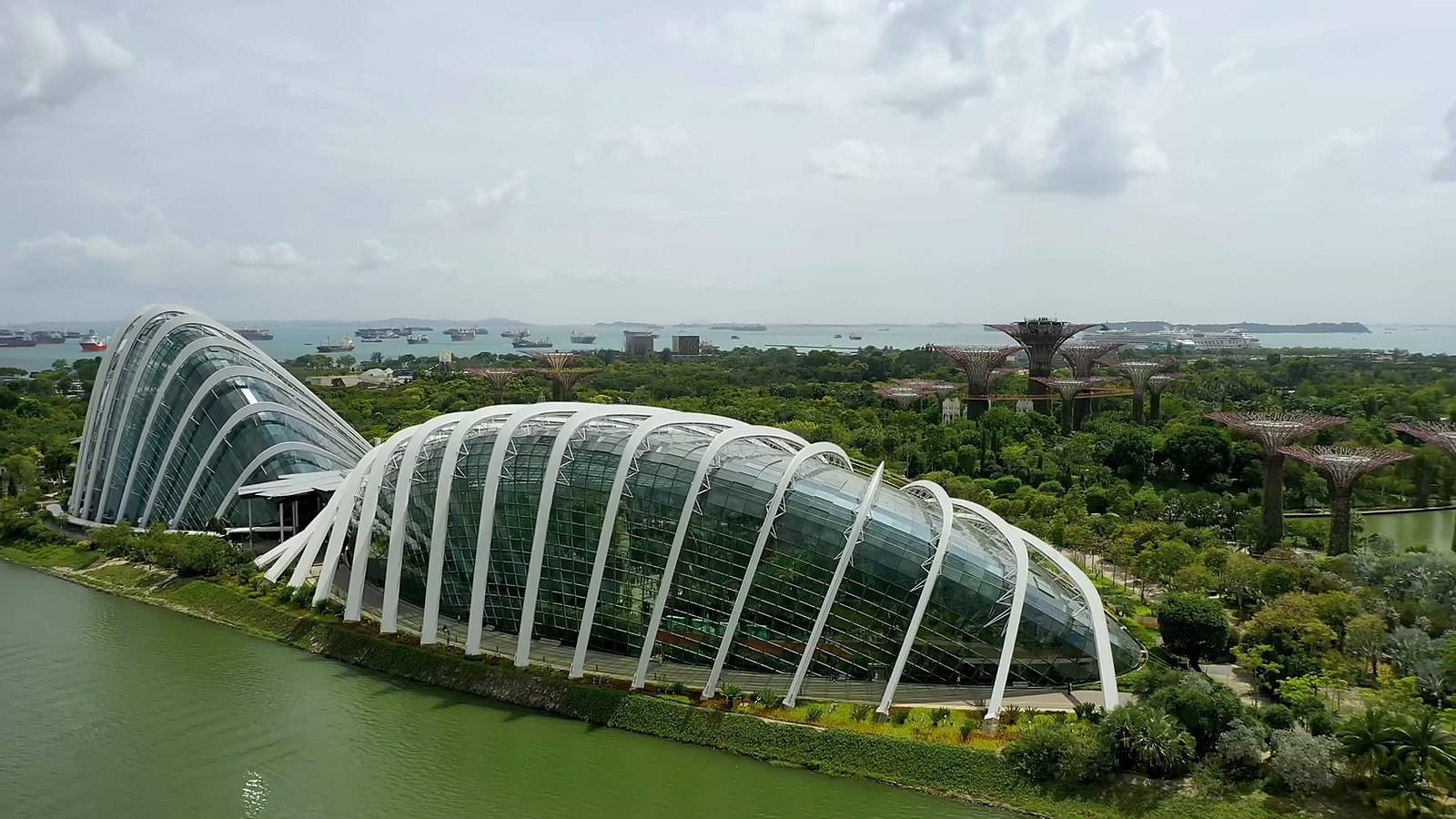
The Flower Dome is kept at 23°C to 25°C, because its olive trees, baobabs and cacti come from cool, dry places like the Mediterranean and South Africa. That's hard to do in a building made of glass. Sunlight pours in and its heat gets trapped, so a glass house in the sun ends up hotter than the air outside, like a car parked at noon.
So yes, the dome is air-conditioned. But cooling a glass building this size the usual way would use a huge amount of power. Instead, it uses three tricks to need far less cooling: keep the sun's heat out, dry the air, and cool only the part people use.
1. Keep the sun's heat out
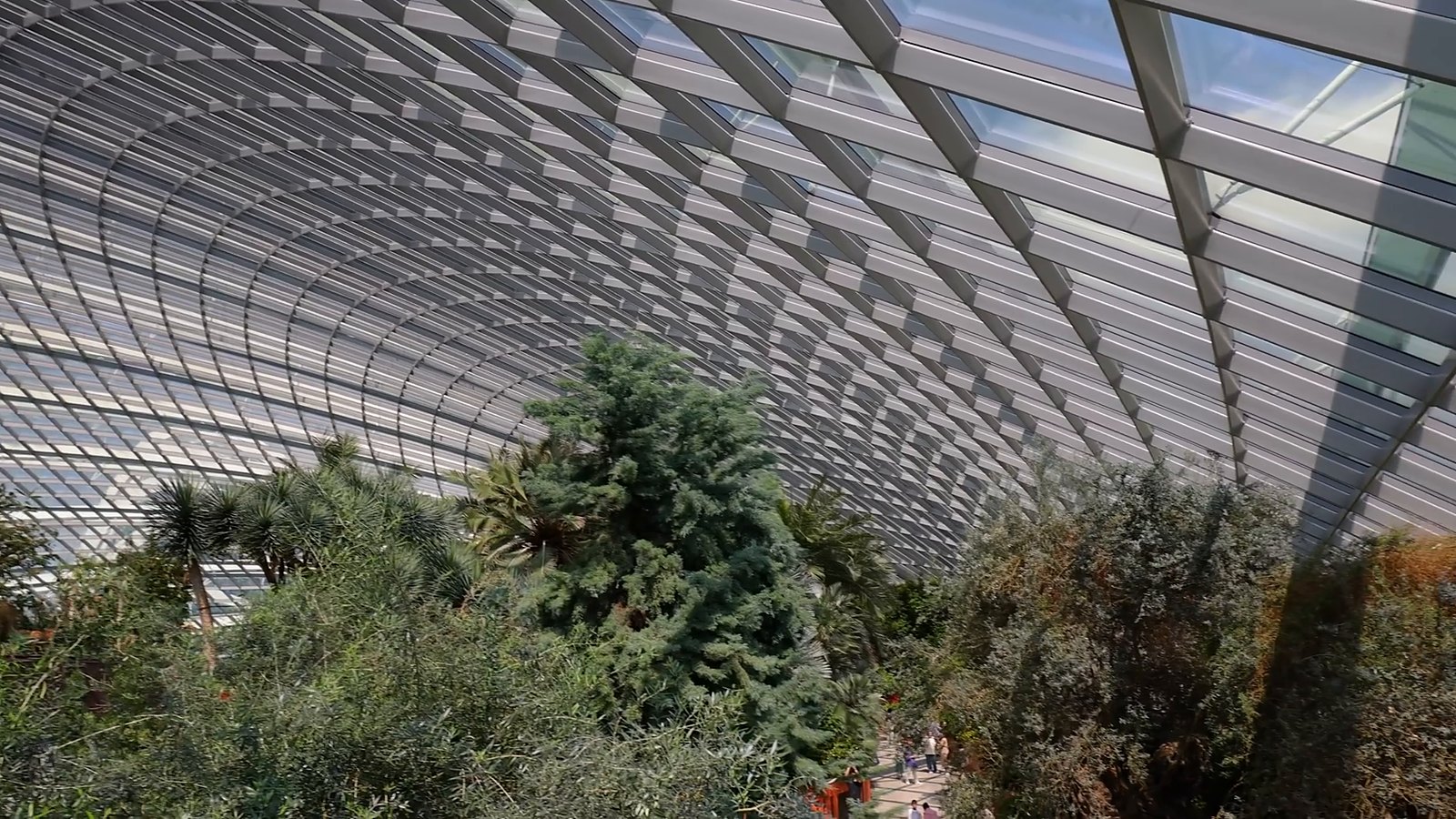
The glass works like sunglasses. The panes have a coating that lets in the light plants need but blocks much of the heat. On very hot days, sensors also pull shade sails across the roof. The shades cover every side except the north, which is tilted so it gets little direct sun in the first place.
2. Dry the air before cooling it
Singapore's air is full of water. On an average day, a cubic metre of air here holds about 21 grams of it. The same air in London holds about 8 grams, so Singapore's holds nearly three times as much.
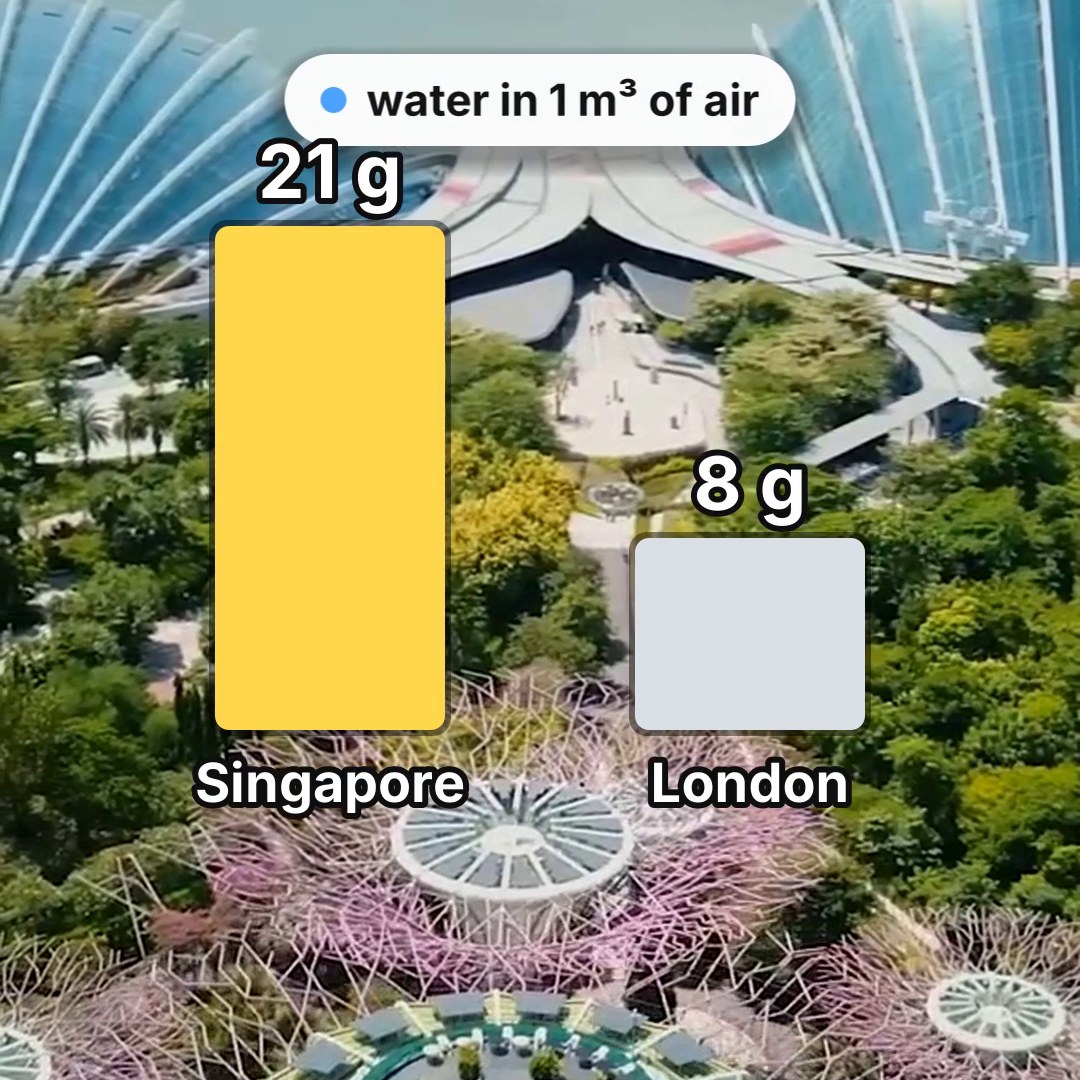
That water is the hidden problem. Before an air conditioner can cool the air, it has to get the water out, and it does that the hard way. It chills the air to around 12°C, far colder than anyone wants, so the water condenses out the way drops form on a cold can. In Singapore, a big share of an aircon's energy goes into that step.
The Flower Dome takes the water out first, with a liquid drying agent (the engineers call it a liquid desiccant). It's lithium chloride dissolved in water: basically very salty water. It soaks up moisture from the air the way a silica gel packet does in a new pair of shoes.
Once the air is dry, it only needs a gentle cool. The dome blows its air in at around 18°C instead of the usual 12°C, and that difference saves a lot of energy.
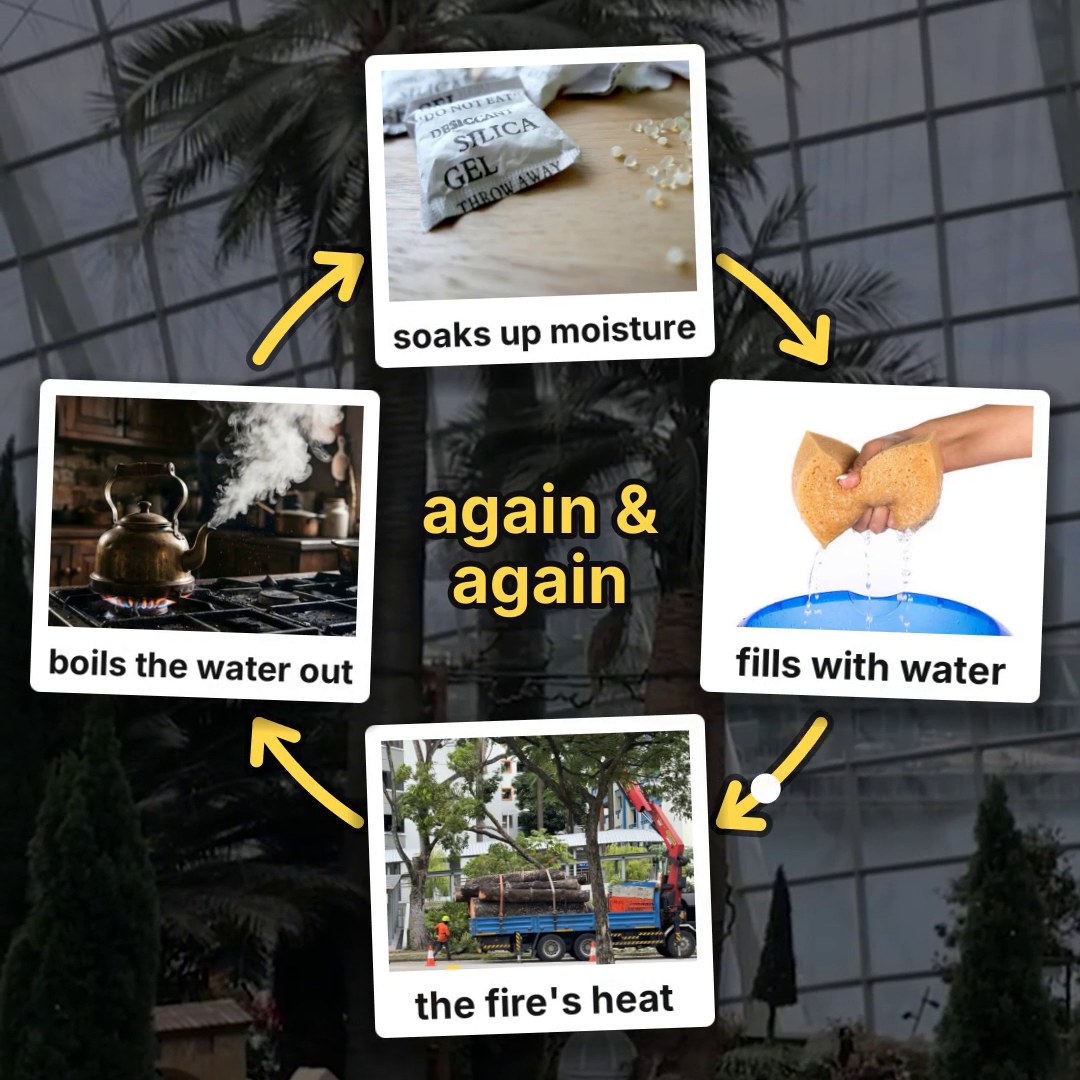
The drying agent is used again and again:
- It soaks up moisture from the dome's air.
- As it does, it fills with water and gets weaker.
- Heat left over from Gardens by the Bay's wood-fired power plant warms it up (more on that below).
- That boils the water back out, so the drying agent is strong again and goes back to work. The damp air from this step leaves through the Supertrees next to the domes.
The Cloud Forest next door is meant to feel like a damp mountain, so the drying only happens in the Flower Dome.
3. Cool only the bottom of the dome
The main point is to save energy. The plants and visitors are all down at the bottom, so that's the only part that needs to be cool. The Flower Dome holds as much air as 75 Olympic swimming pools hold water, and cooling all of it would mean paying to chill empty space high above everyone's heads.
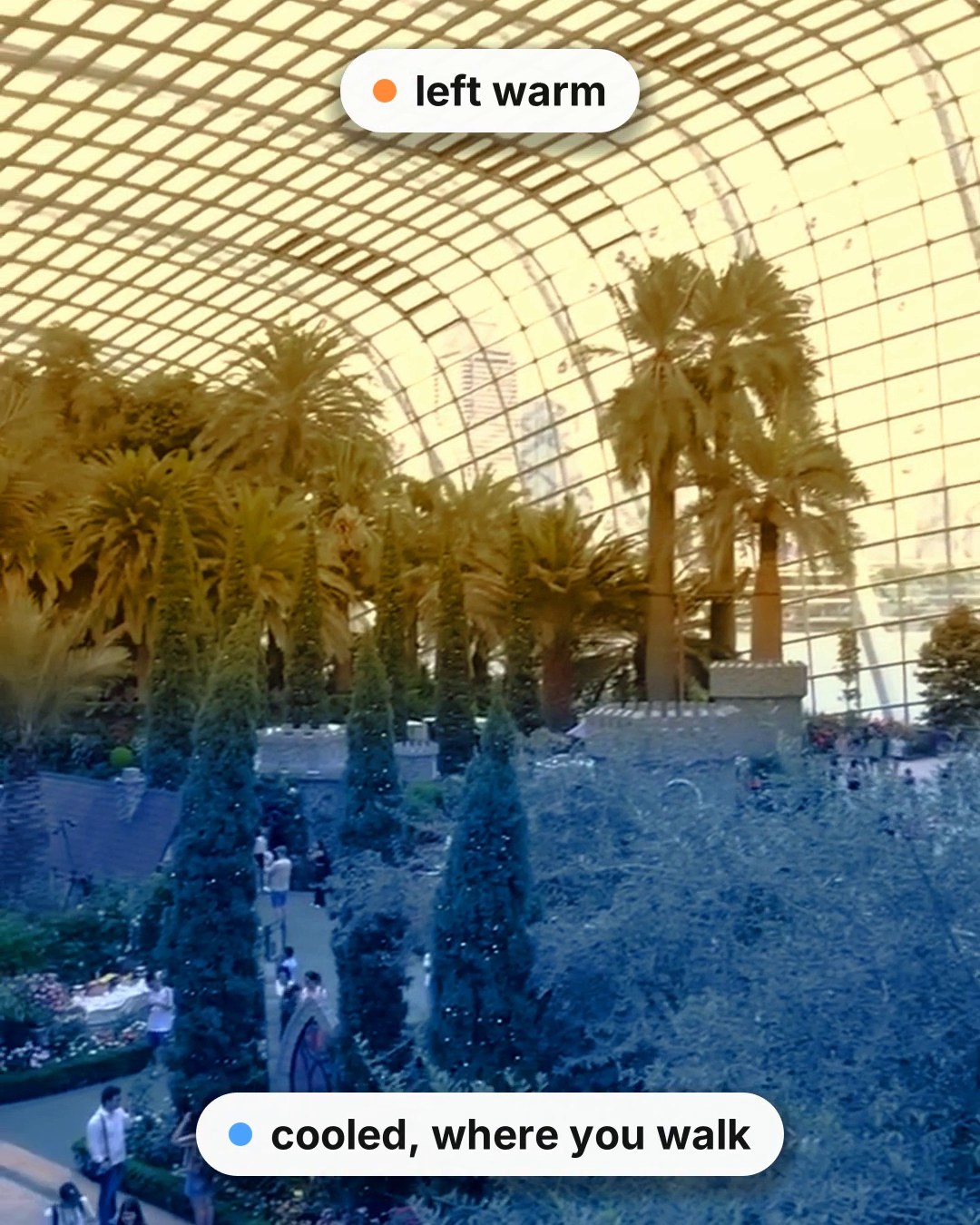
It works because cool air is heavier than warm air. In a tall space, cool air sinks and stays low while warm air floats up. You've felt this when you open a fridge and the cold spills onto your feet.
So the cool, dry air is let in at ground level, among the plants and paths. Cold water also runs through pipes under the paths, so the floor itself stays cool. The cool air spreads across the floor and stays there in a layer. Higher up, the air is left to warm, and it's drawn out near the roof.
There's a bonus. The roof is where the sun's heat gets in, so the air right under the glass is the hottest in the dome. Cooling that layer would be a losing battle, because the sun keeps reheating it all day. So the dome doesn't waste energy on it. It leaves that air warm and draws it out, which keeps the heat up and away from the plants.
Together, these tricks use about 30% less energy than cooling a building the conventional way.
One tip that follows from all this: do the outdoor gardens in the morning, and save the domes for 1pm to 4pm. That's when the heat outside is at its worst and the domes are at their most useful.
Where does the power come from?
Part of it comes from Singapore's trees. Wood and garden waste collected from around the island, mostly branches cut during street-tree pruning, is chipped and burnt in a boiler on site. When the system was designed, the wood was too wet to burn well, so the engineers mixed it with old wooden packing crates from the freight terminal nearby.
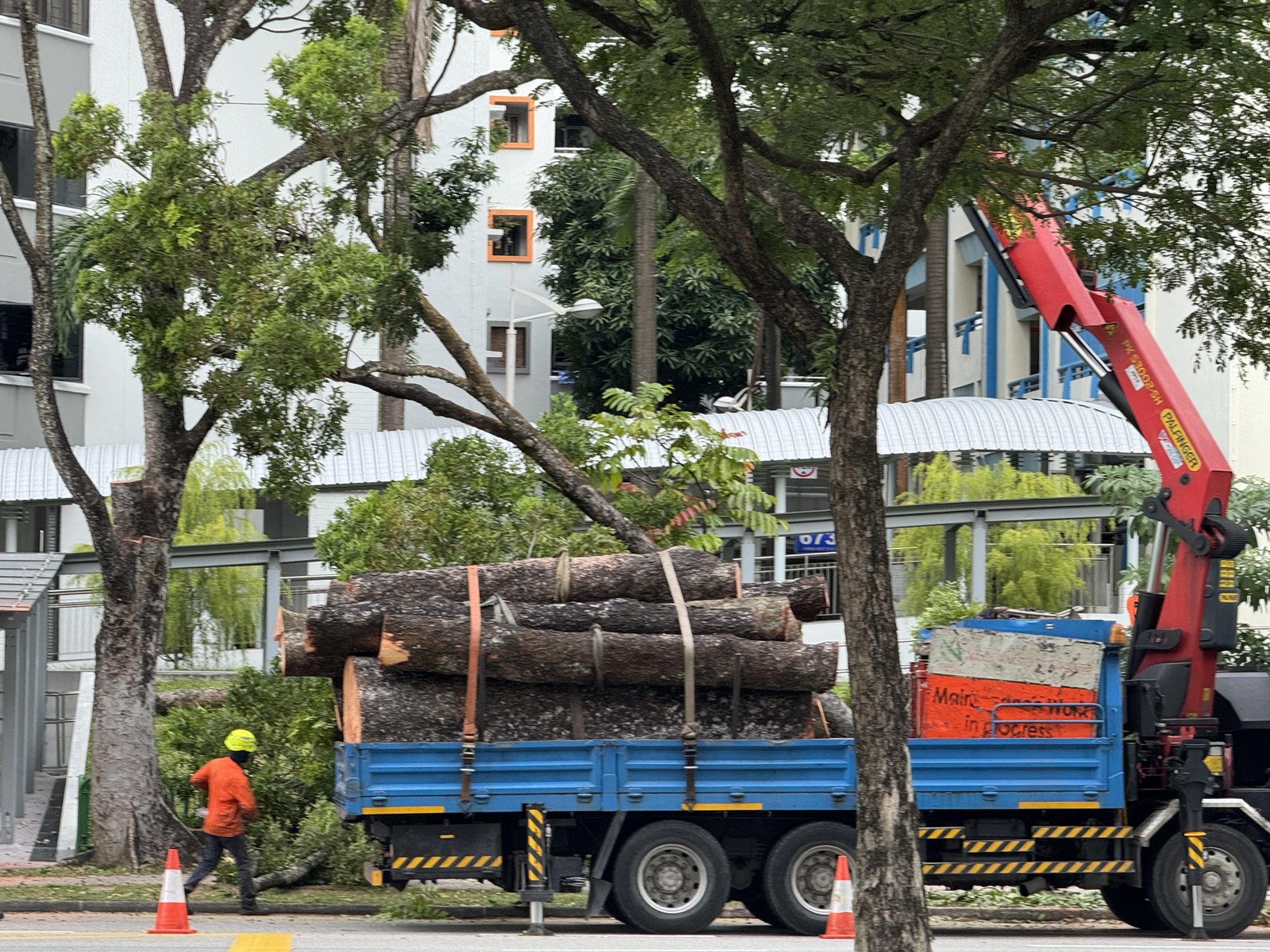
The fire gets used twice. First, its steam spins a turbine that makes electricity. Most power stations throw away the heat left over after that. Here, the leftover heat has two jobs. It boils the soaked-up water back out of the Flower Dome's drying agent, so the drying agent can be used again. It also powers chillers, machines that use heat to make cold water. That cold water cools the air going into the domes and runs through the pipes under the paths.
Even the ash has a job. It's turned into fertiliser and into material for concrete.
Burning wood still releases carbon dioxide. But these branches were cut anyway, and if they were left to rot, they would release about the same amount of carbon. That's why the electricity is called carbon-neutral: the fire adds no more carbon than the branches would have given off anyway.
Think of it this way. Gardens by the Bay needs the electricity either way. If it came from Singapore's grid, natural gas would be burnt at a power station to make it, and the branches would still rot and release their carbon. That's two lots of carbon. Burning the branches for power leaves only one: the carbon from the branches, which was going to end up in the air anyway.
You can't see the boiler on a normal visit. Gardens by the Bay has run occasional behind-the-scenes tours of it, so check its events page if you'd like to get inside.
What are the Supertrees actually for?
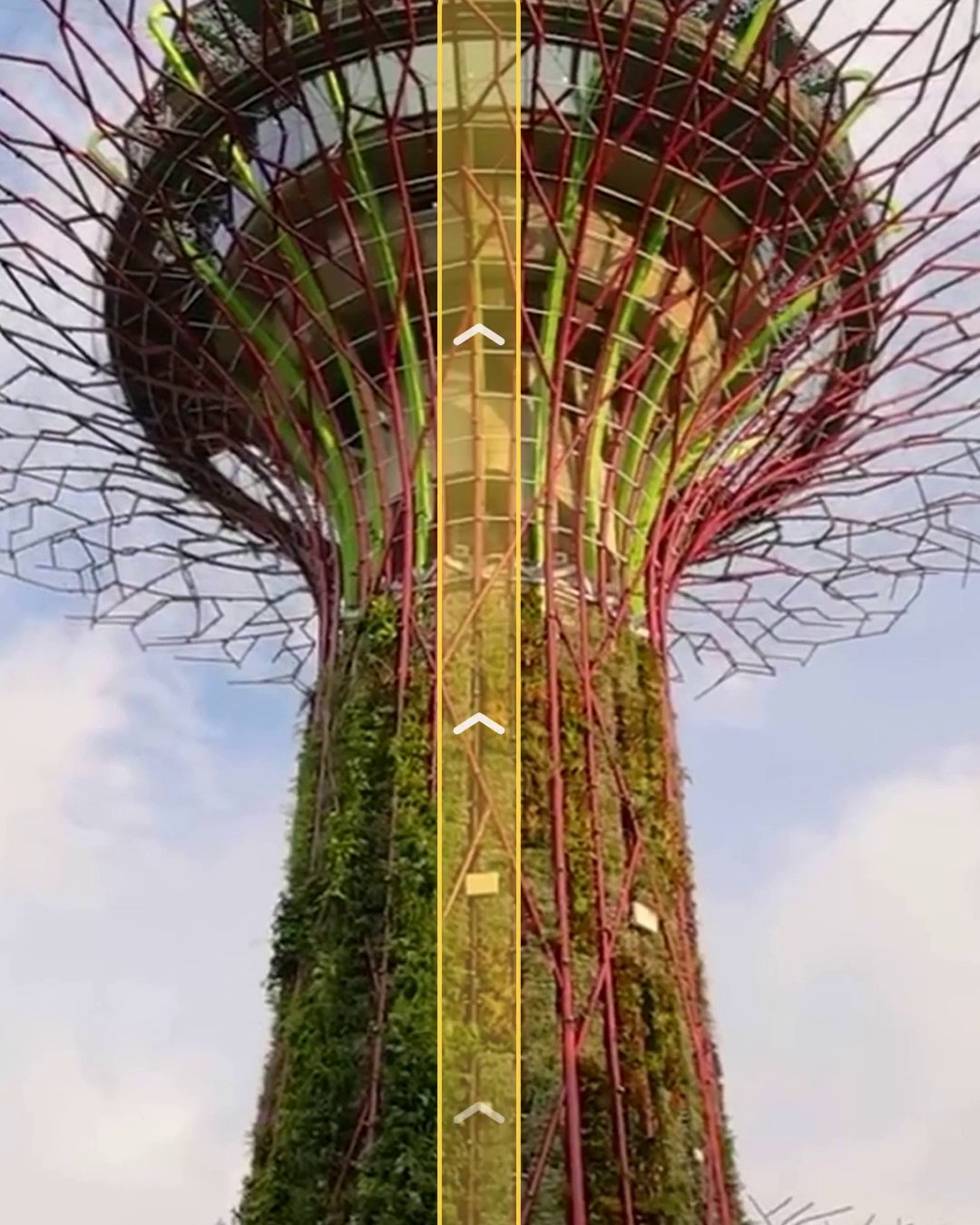
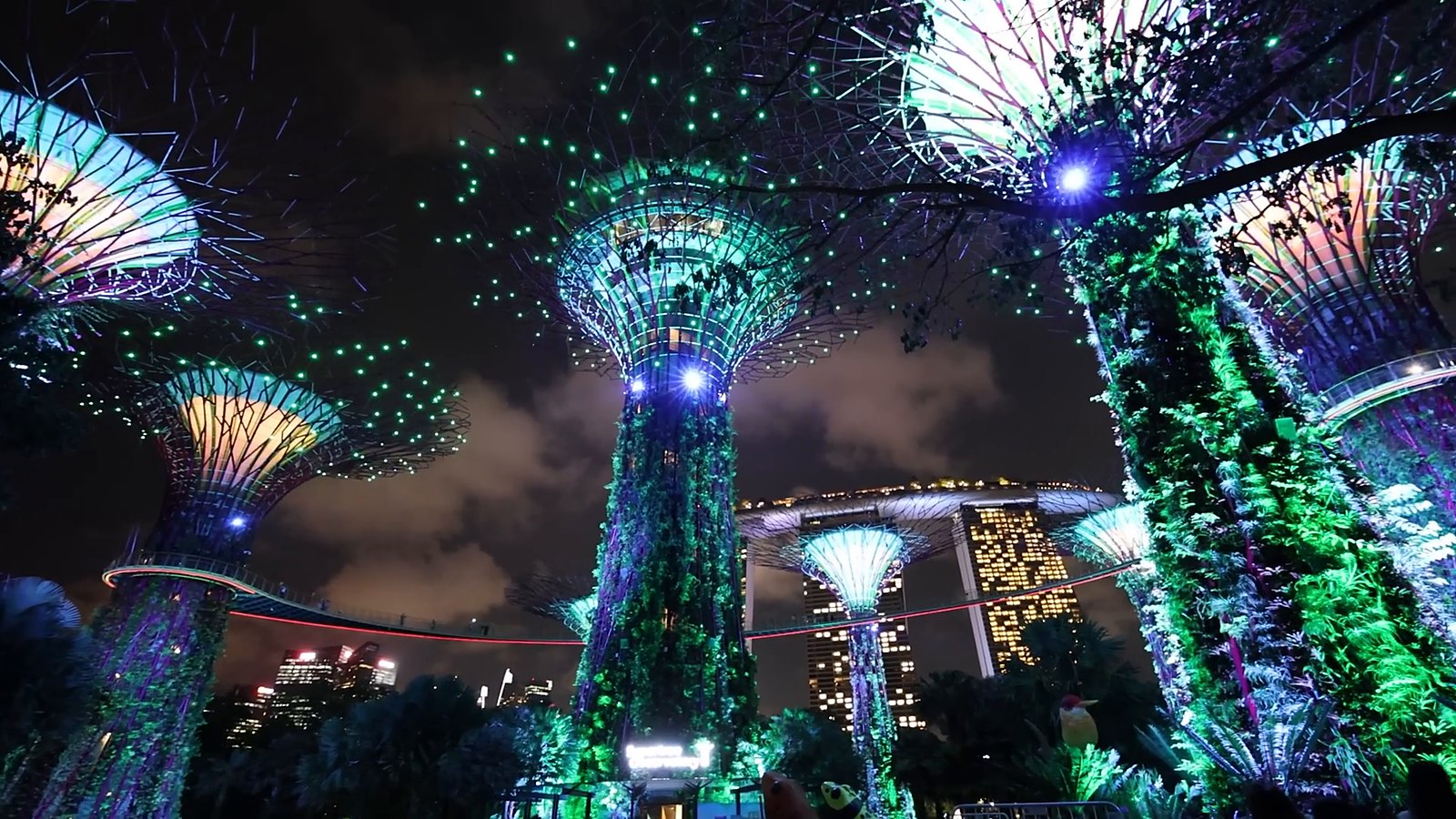
The light show is the answer most people would give. The real answer is that the Supertrees are partly a disguise.
A biomass boiler needs a tall chimney, and cooled domes need vents to breathe in and out. Put all that on the waterfront and you'd have pipes and flues sticking up in front of Marina Bay. So the designers wrapped those pipes in steel trunks and covered them in plants. Some of the Supertrees hold the boiler's chimney. Others take in air for the domes or let it out.
There are 18 Supertrees, between 9 and 16 storeys tall. Twelve stand in the Supertree Grove, and three each sit in the Golden Garden and the Silver Garden. Eleven of them do a job beyond looking good:
- Solar panels. Some have panels laid almost flat on top of the canopy. You can't see them from the ground. They collect sunlight during the day to help light the Supertrees at night.
- Breathing for the domes. The three silver Supertrees by Dragonfly Lake, the ones closest to the domes, are connected to the Flower Dome by an underground tunnel. The warm air drawn out near the dome's roof travels through it and leaves from the top of these Supertrees, along with the steam from drying the drying agent. It can't just stay in the dome. The sun keeps heating the air under the glass all day, so the warm layer would grow and creep down towards the plants. And since cool air is let in at the bottom all the time, the same amount has to leave somewhere.
- Catching rain. Some canopies also collect rainwater for watering plants and for the fountains.
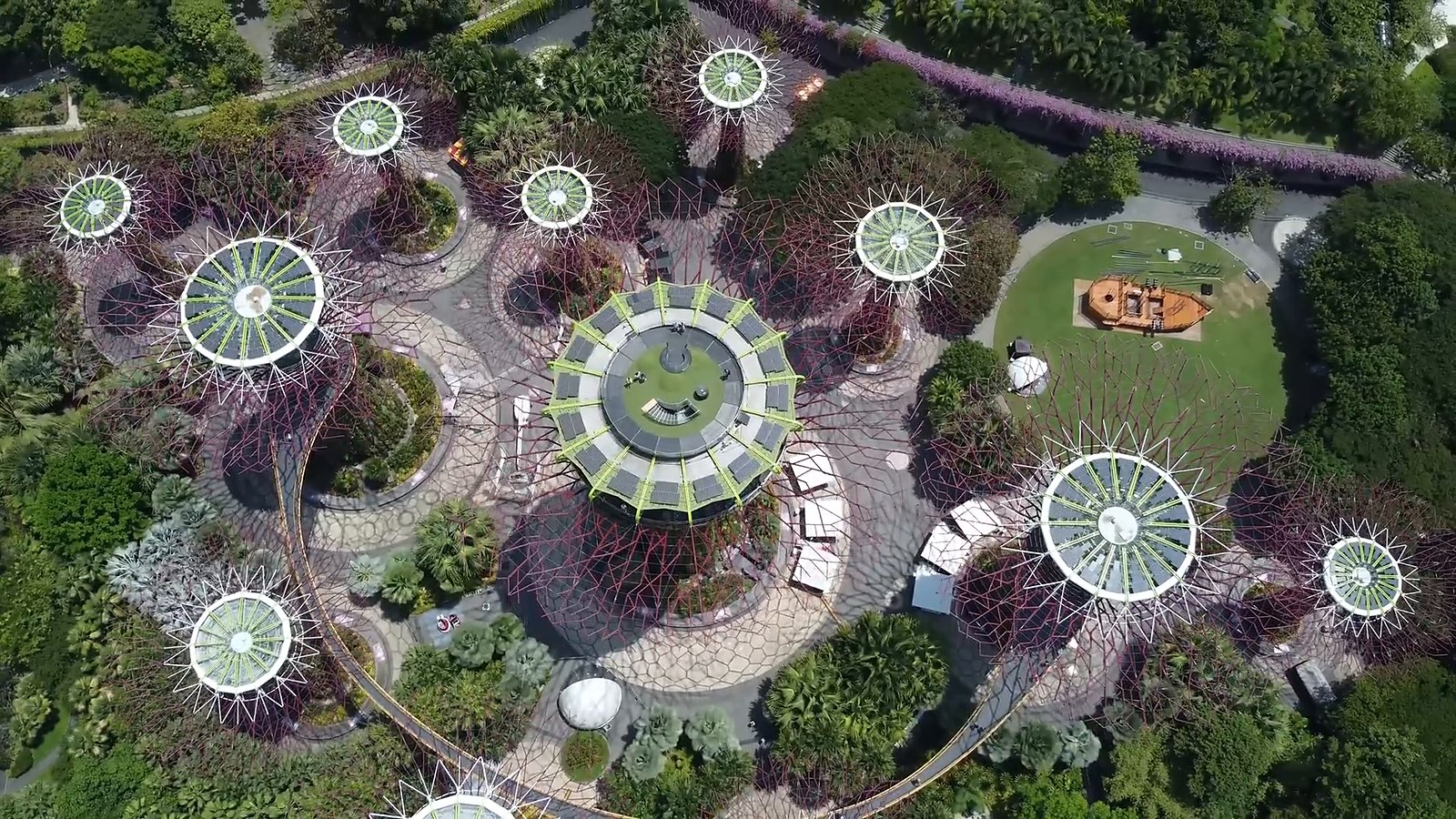
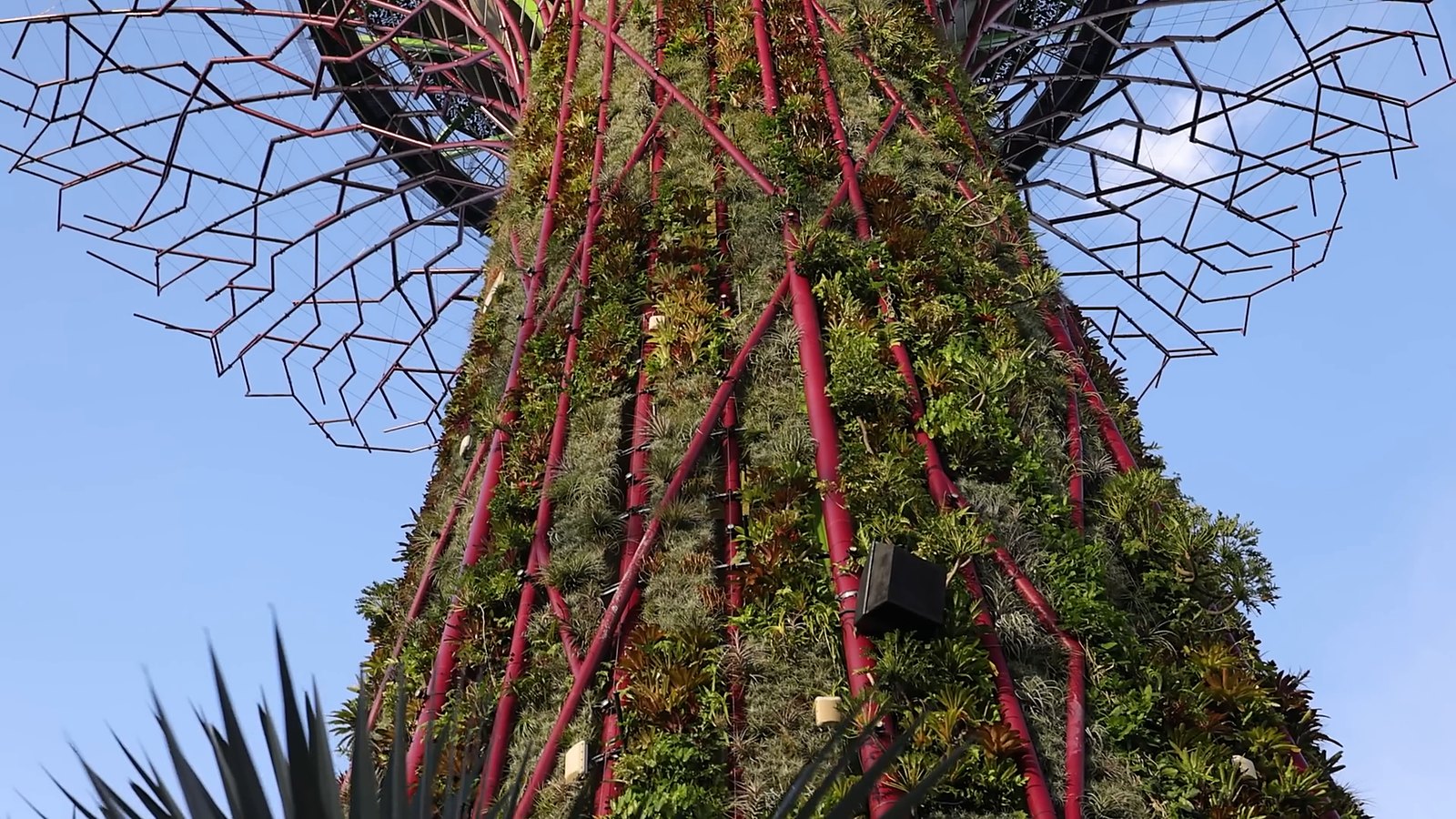
And the plants on them are real: more than 162,900 of them, mostly ferns, orchids, climbers and bromeliads. Look closely at a trunk and you'll see the steel panels they grow in.
So is it actually green?
Partly. It's still a giant glass house, air-conditioned all day, a degree off the equator. The greenest option would have been not to build cold domes at all, and that's a fair point to make.
What Gardens by the Bay can show is that it built them about as efficiently as anyone knows how. The design target was for the two domes to use no more energy than an ordinary commercial building of the same size. The cooling tricks above cut energy use by about 30%. In August 2025 Gardens by the Bay finished putting up more than 1,700 solar panels, including on the Supertrees, and by late 2025 nearly 40% of its energy came from solar and biomass. The rest still comes from the national grid.
The more useful lesson is in the tricks themselves. Cool only the space people use. Dry the air before you chill it. Treat waste as fuel. None of these need a Supertree, and they work just as well in an office tower or a shopping mall.
See it for yourself
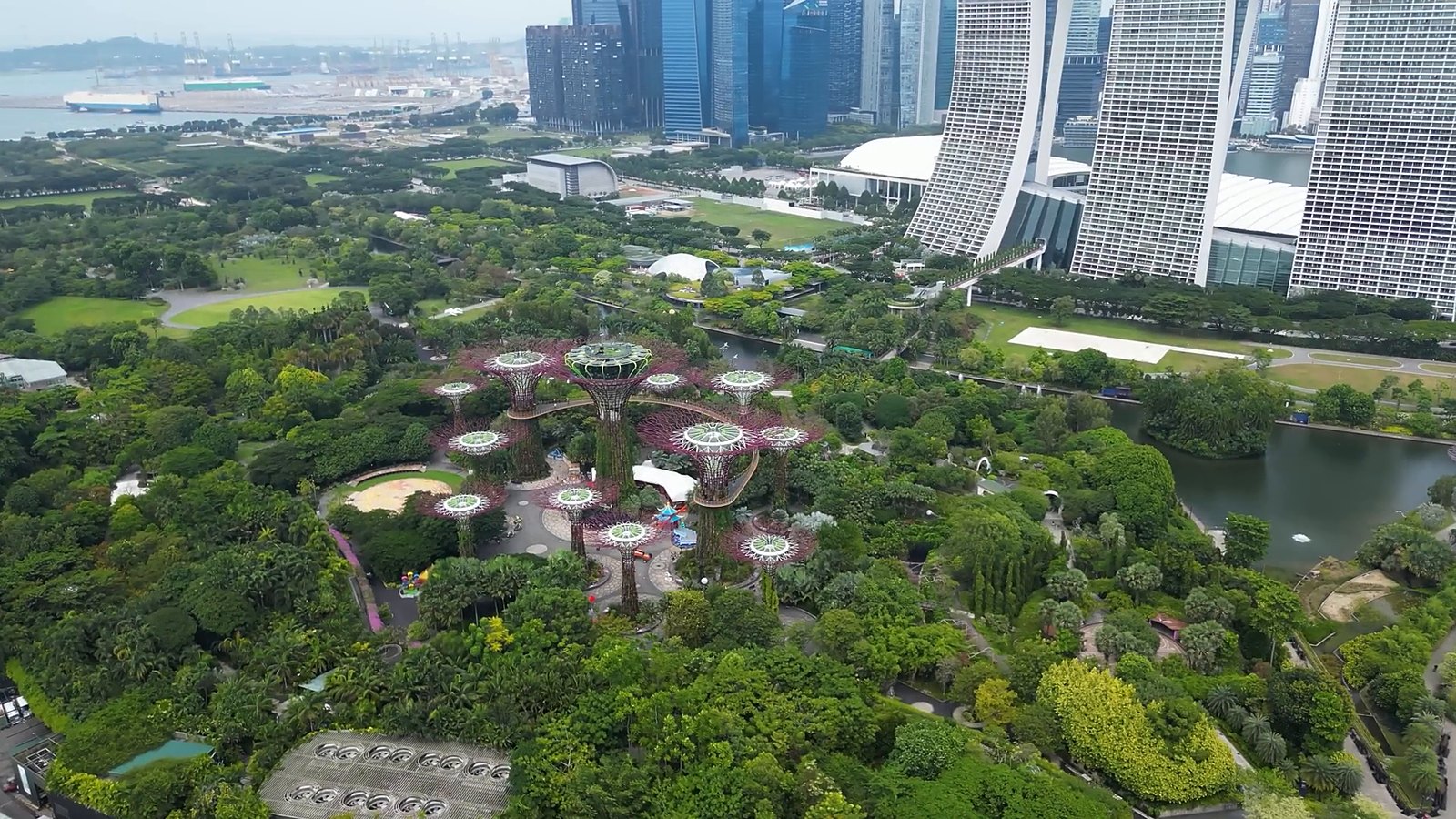
Next time you're at the Supertrees, find the three silver ones beside the domes. That's where the Flower Dome breathes out. Then walk into the dome from the heat. The glass roof above you is in full sun all day, yet down on the paths it's cool enough for olive trees.
Gardens by the Bay is the first stop on our Marina Bay + Lau Pa Sat walking tour. From there, the walk moves on to the land itself, which was reclaimed from the sea, and to why the buildings around the bay look the way they do. It finishes with dinner at Lau Pa Sat.
FAQ
Is Gardens by the Bay sustainable?
More than most air-conditioned buildings, less than a park with no domes. Its cooling methods use about 30% less energy than conventional cooling, and by late 2025 nearly 40% of its energy came from solar panels and burning garden waste.
How is the Flower Dome kept cool?
Coated glass and shade sails keep out much of the sun's heat. The air is dried first with a liquid drying agent, so it only needs a gentle cool. Then only the bottom of the dome, where the plants and paths are, is kept cool.
Why is only the bottom of the Flower Dome cooled?
Cool air sinks and warm air rises, so cool air let in at ground level stays low on its own. Most of the dome's air is high above visitors' heads, and the air under the glass roof is the hottest. Cooling only the bottom layer avoids paying to chill empty space and fighting the sun at the roof.
Why does the Flower Dome dry its air?
Singapore's air holds nearly three times as much water as London's. A normal air conditioner has to chill air to around 12°C to get that water out. Drying the air first with a liquid drying agent lets the Flower Dome cool it to only around 18°C, which uses much less energy.
Are the Supertrees solar powered?
Some of them. Solar panels on top of some canopies help power the Supertrees' lights at night. Other Supertrees hold the chimney of the wood-burning boiler, or pull air in and out for the domes.
What does Gardens by the Bay burn for energy?
Wood and garden waste from around Singapore, mostly branches from street-tree pruning. It makes electricity, and the leftover heat helps cool and dry the domes.
Can I join a sustainability tour at Gardens by the Bay?
Gardens by the Bay runs free Nature & Sustainability tours on weekends. Places are limited, so check the Gardens by the Bay tours page for dates and who can sign up.
Sources
- Gardens by the Bay: Sustainability, Flower Dome, Supertree Grove, Nature and Sustainability Tours
- Singapore Department of Statistics: Environment and climate
- National Environment Agency: Air temperature, sunshine, relative humidity and rainfall, annual